






If you have spent any time browsing modern furniture catalogs, you have likely spotted the label "Contract Grade" or "Commercial Grade" accompanied by a small briefcase badge or a higher price point.
While it sounds like technical jargon reserved strictly for hotel lobbies, corporate headquarters, and high-turnover restaurants, contract-grade pieces are increasingly entering modern residential homes.
Below is an authoritative look into what contract-grade furniture actually means, the engineering and safety standards behind the certification, how it compares directly to standard residential pieces, where it matters most, and whether upgrading is worth your investment.
What Does "Contract Grade" Furniture Actually Mean?
Contract-grade furniture (also referred to as commercial-grade) is furniture specifically engineered, load-tested, and certified to withstand continuous, high-volume use in commercial and public environments. To officially qualify, these items must meet rigorous safety, structural, and flammability benchmarks established by recognized industry bodies such as ANSI/BIFMA and commercial textile testing organizations.
While standard retail furniture is built under the assumption that a single household will use it gently for two to four hours each evening, contract-grade furniture is constructed to endure 8 to 16+ hours of relentless daily use by people of varying body types, weights, and habits.
The Science of Durability: Behind Industry Testing Standards
A brand cannot simply apply a "contract-grade" badge to a chair for marketing purposes. Authentic commercial furniture must pass standardized mechanical testing designed to simulate years of aggressive wear within a matter of days.
1. ANSI/BIFMA Structural Testing
The Business and Institutional Furniture Manufacturers Association (BIFMA), in conjunction with the American National Standards Institute (ANSI), establishes stringent mechanical benchmarks for commercial items:
-
Dynamic Drop Testing: A 225- to 300-pound weight is dropped repeatedly onto seating surfaces from varying heights to evaluate internal frame resilience, shock absorption, and base stability.
-
Backrest Durability: Cyclic pressure (typically 70 to 100+ pounds of force) is applied to the back of a chair up to 100,000 times to guarantee that mechanical joints do not loosen, wobble, or snap under continuous reclining.
-
Pull & Leg Strength: Mechanical arms exert multi-directional sideways force against table legs, stool bases, and armrests to measure structural deflection, weld integrity, and joint shear resistance.
2. Commercial Rub Counts (Martindale & Wyzenbeek)
Upholstery breakdown is the leading reason residential seating gets replaced prematurely. Commercial textiles are tested using mechanized abrasion pads rubbing in figure-eight or back-and-forth patterns until yarn breakage occurs:
-
Standard Residential Fabric: Typically rated at 12,000 to 15,000 double rubs (Wyzenbeek method).
-
Heavy-Duty Commercial Fabric: Rated at 30,000 to 100,000+ double rubs.
A piece rated at 100,000 double rubs withstands persistent friction from heavy work denim, pet claws, active children, and repeated wipe-downs with commercial sanitizing detergents without fraying, pilling, or thinning out.
3. Fire and Flammability Standards
Unlike general household items, contract-grade furnishings must adhere to stringent municipal and state fire safety codes:
-
CAL 117 (California Technical Bulletin 117-2013): Regulates the flame-retardant properties and smolder resistance of upholstered resilient filling materials.
-
NFPA Standards (e.g., NFPA 260 / UFAC Class 1): Measures cigarette ignition resistance and slow-burning behavior for upholstered components in public environments.
Contract Grade vs. Residential Furniture: Side-by-Side Comparison
| Feature / Metric | Standard Residential Furniture | Authentic Contract-Grade Furniture |
| Intended Daily Use | 2–4 hours / day (single household) | 8–16+ hours / day (continuous public traffic) |
| Typical Weight Capacity | 200 – 250 lbs per seat | 350 – 500+ lbs per seat |
| Fabric Abrasion Resistance | 10,000 – 15,000 double rubs | 30,000 – 100,000+ double rubs |
| Frame Construction | Standard staples, light glue, particle substrate | Precision-welded heavy-gauge steel, reinforced joinery, reinforced internal ribs |
| Surface Durability | Standard lacquers, soft veneers prone to scratches | High-Pressure Laminates (HPL), thermoset melamine, UV-cured powder coatings |
| Safety Testing & Certification | Minimal or voluntary in-house checks | ANSI/BIFMA certified, CAL 117 compliant, NFPA certified |
| Expected Lifespan | 2 – 5 years before structural fatigue | 10 – 15+ years under typical residential conditions |
| Manufacturer Warranty | Typically 1 year limited | 5 to 10+ years (often including structural guarantees) |
Structural Engineering: What Makes It So Durable?
There is a common misconception that commercial durability simply means "thicker wood." In reality, modern commercial engineering relies heavily on advanced material science:
-
Heavy-Gauge Metals: Table bases and chair legs utilize thickened steel or tubular aluminum with continuous weld lines rather than spot-welds, eliminating joint separation under load.
-
High-Pressure Laminate (HPL) & Engineered Cores: Natural solid wood naturally expands, contracts, and checks with changes in seasonal indoor humidity. Commercial surfaces often utilize high-density engineered substrates faced with heat-sealed HPL or antimicrobial coatings that resist moisture, hot coffee mugs, sanitizer spray, and ink stains.
-
High-Density Molded Foams: Low-end residential cushions use low-density polyurethane foam that sags and loses its shape within 18 months. Commercial-grade seating incorporates cold-cured or high-resilience (HR) molded foams that maintain bounce-back density across a decade of use.
The 3 Key Furniture Pieces Where Contract Grade Matters Most
You don't necessarily need commercial-grade construction for a guest bedroom dresser that gets opened twice a month. However, high-impact functional areas in a home benefit exponentially from contract-grade engineering:
-
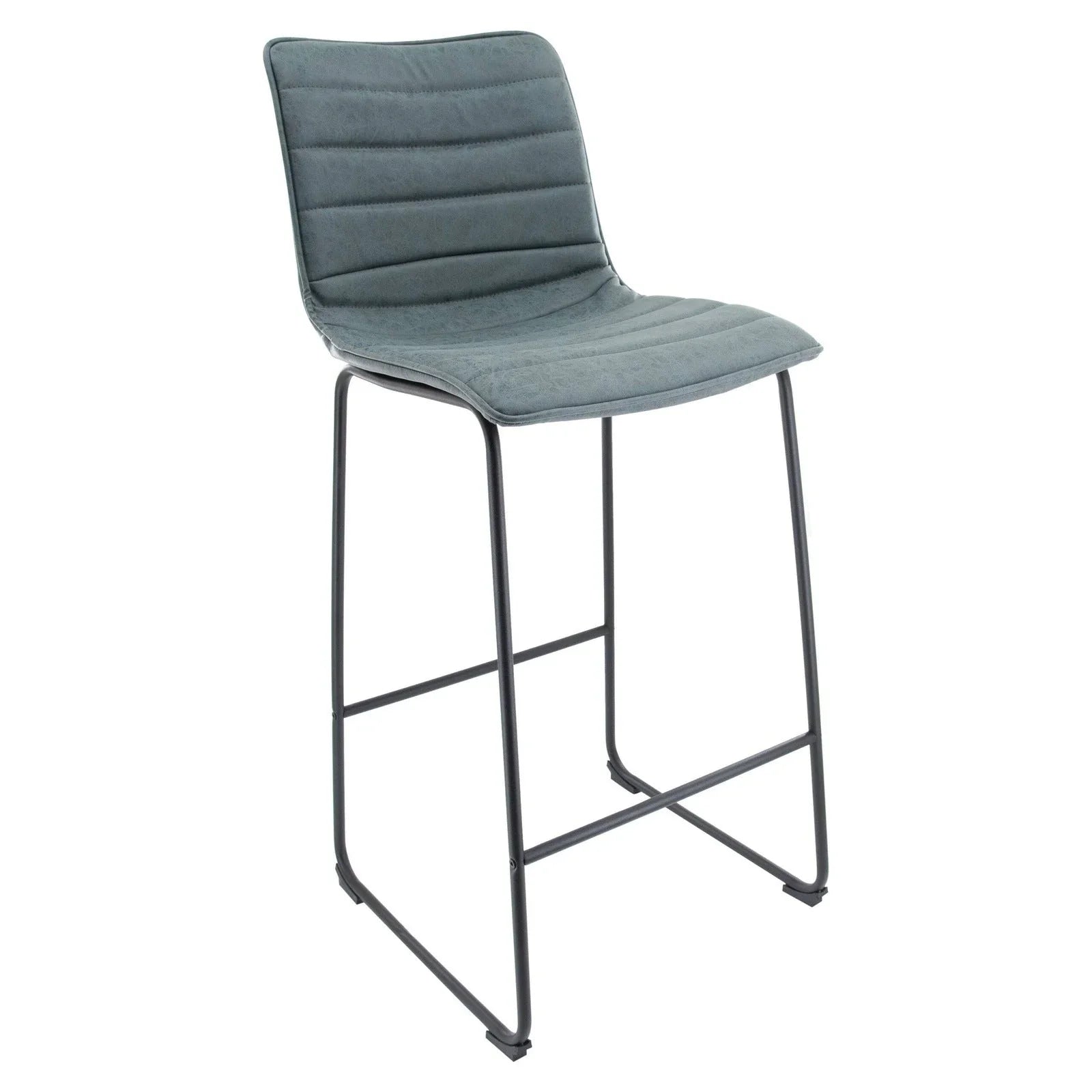
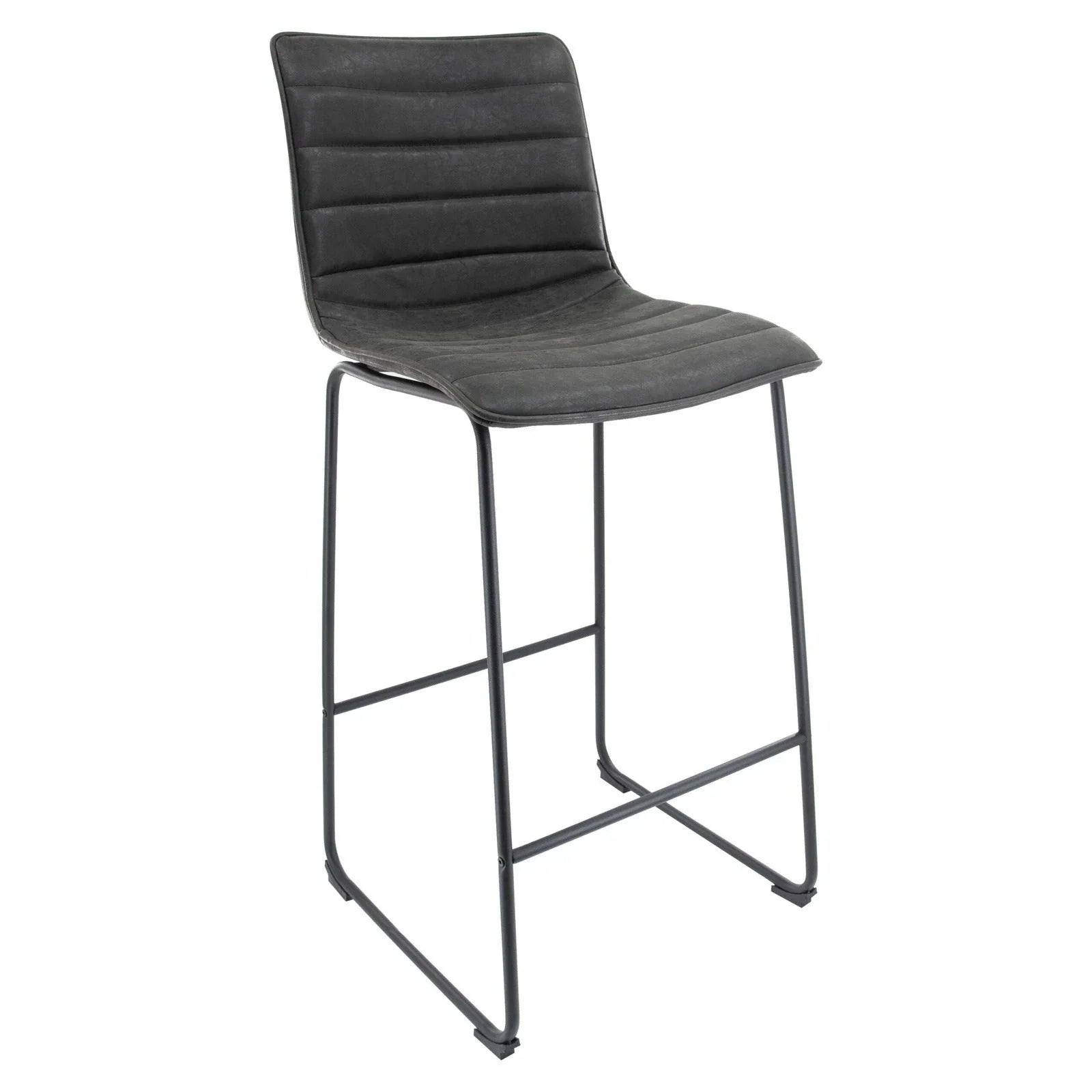
Dining Chairs & Counter Stools: Because dining chairs are pulled, tilted, and shifted multiple times a day, residential models quickly develop loose joints and wobbly legs. Counter stools experience even greater stress due to the leverage created by their height. Commercial-grade stools feature reinforced footrests, cross-bracing, and welded steel subframes that stay completely rigid.
-
Main Living Room Sofas & Sectionals: The central family couch endures dropped weights, pets jumping, and hours of continuous posture changes. Contract-grade frames prevent middle-rail sag and broken spring retainers, while 50,000+ rub fabrics resist color transfer and fabric pilling.
-
Primary Home Office Chairs: Using a decorative retail chair for eight hours a day often leads to spinal strain and failed lift cylinders. Contract-grade task chairs feature class-4 gas cylinders, synchronous tilt mechanisms, and certified lumbar geometry built for continuous, ergonomic workdays.
Why Homeowners Are Buying Contract-Grade Furniture
While commercial items carry a higher initial ticket price, the shift toward commercial specifications in residential interiors is driven by everyday pragmatism:
1. Active Households with Kids and Pets
Modern family rooms endure heavy stress. Between dogs jumping on the sectional, children turning dining chairs into obstacle courses, and unavoidable spills, residential-grade upholstery and loose joinery often deteriorate quickly. Contract-grade performance fabrics and steel frames shrug off this wear without requiring constant spot-treating or protective slipcovers.
2. Hybrid and Remote Workspaces
Transitioning between remote tasks and daily living requires furniture that can bridge both worlds without wearing out. A commercial task chair or modular desk system provides the stability needed for serious daily workloads while blending cleanly into contemporary home aesthetics.
3. The "Cost-Per-Year" Math
A mass-market dining chair may cost $120 but start wobbling at the joints after two years of daily family meals ($60/year). A contract-grade alternative at $300 that remains structurally rock-solid for 12 years costs $25/year. Over a decade, the commercial-grade option offers superior financial value and keeps discarded furniture out of landfills.
Commercial Furniture Buyer’s Checklist: What to Look For
When evaluating pieces that claim to be contract grade, look for these explicit specifications on the product tear sheet:
-
[ ] BIFMA / ANSI Tested: Clear mention of specific testing standards (e.g., ANSI/BIFMA X5.1 for office seating, X5.5 for desk products).
-
[ ] Rub Count Specification: Documented Martindale or Wyzenbeek double rub ratings of at least 30,000+ for standard seating or 50,000+ for main family room sectionals.
-
[ ] Weight Rating Documentation: Stated load limits of at least 300 to 400+ lbs per seat.
-
[ ] Finish Specifications: Powder-coated metal surfaces rather than electroplated or dipped finishes; commercial-grade clear protective coats on exposed surfaces.
-
[ ] Commercial Warranty Coverage: A multi-year structural warranty that does not explicitly void coverage if the piece is subjected to regular, high-frequency use.
FAQ
1. What certifications should I check for contract-grade furniture in the US?
In the United States, look for testing certifications jointly administered by the American National Standards Institute (ANSI) and the Business and Institutional Furniture Manufacturers Association (BIFMA), such as ANSI/BIFMA X5.1 (office seating) and X5.5 (desk systems). Additionally, verify state-level compliance standards, most notably California Technical Bulletin 117-2013 (CAL 117) and NFPA 260 for commercial flammability safety.
2. Why are CAL 117 fire safety ratings critical for commercial furniture in the US?
California TB 117-2013 (CAL 117) serves as the de facto nationwide benchmark across the United States for smolder resistance in upholstered furniture. While originally mandated by California's Bureau of Household Goods and Services, US hotel chains, corporate office fit-outs, healthcare facilities, and multi-family residential developments across all 50 states require CAL 117-certified resilient filling materials to comply with municipal fire codes and property insurance requirements.
3. How does contract-grade fabric testing work under US Wyzenbeek standards?
In North America, commercial upholstery durability is measured using the ASTM D4157 Wyzenbeek method (counted in "double rubs"). While standard US residential fabrics test between 12,000 and 15,000 double rubs, US contract-grade textiles must withstand 30,000 to 100,000+ double rubs without yarn failure, making them resilient against everyday wear from heavy workwear, denim, pets, and commercial-grade sanitizing detergents.
4. Can US businesses write off contract-grade furniture purchases via Section 179?
Yes. Under IRS Section 179 tax deductions, qualifying US businesses, corporate offices, and commercial property owners can often deduct up to 100% of the purchase price of qualifying commercial and contract-grade furnishings within the tax year they are acquired and placed into service, rather than depreciating the expense over standard multi-year schedules. (Always verify exact limits and eligibility with a certified US tax advisor).
5. Does using residential furniture in a US commercial property void the warranty?
Almost universally, yes. Most US retail furniture manufacturers include explicit clauses in their limited warranty terms stating that using a residential-grade product in a commercial, rental, hospitality, or institutional space immediately voids all structural and upholstery coverage. In contrast, authentic contract-grade furniture comes backed by multi-year commercial warranties specifically structured for high-occupancy environments.

